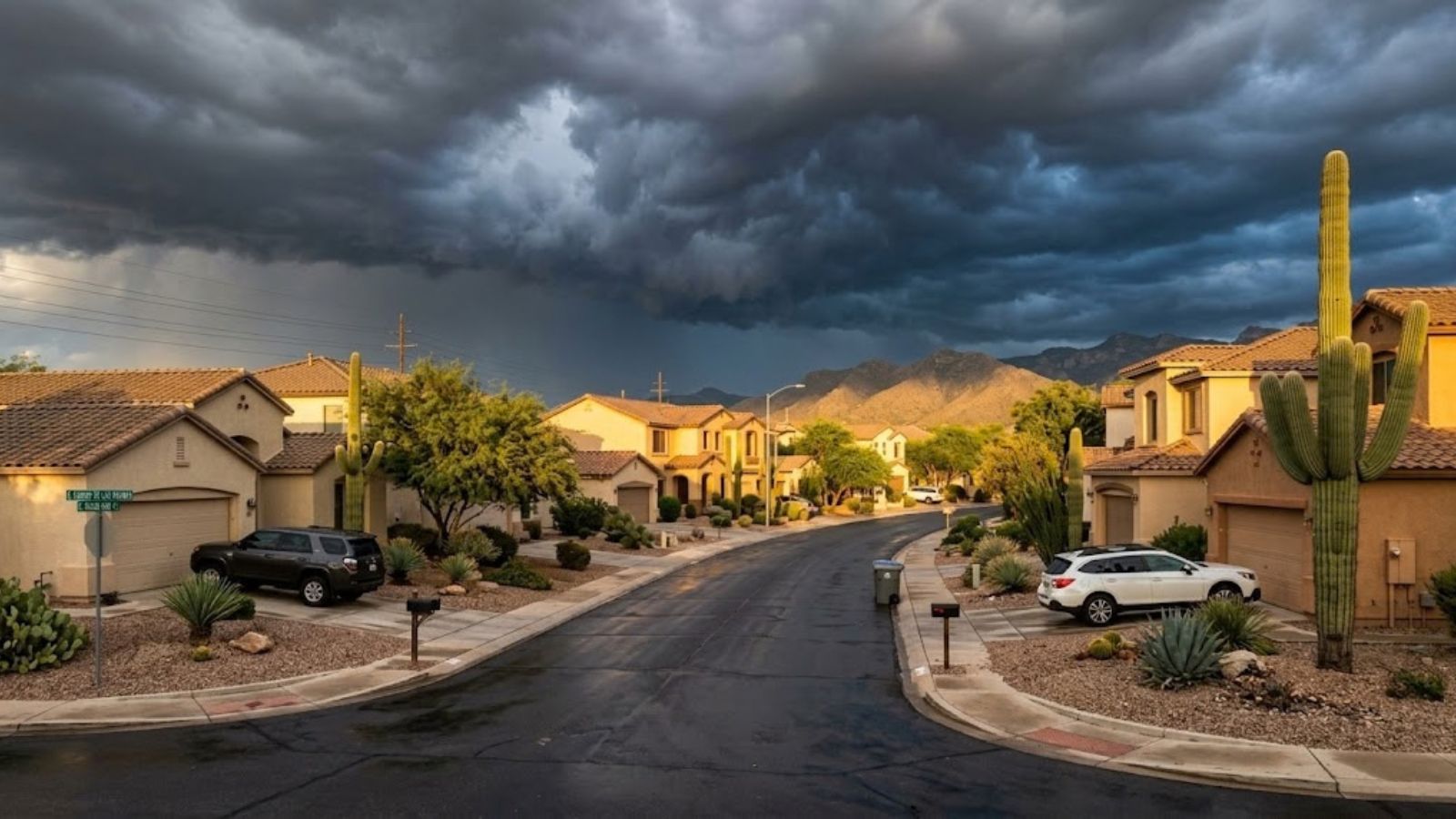
Why Monsoon Season Is Genuinely Different Here
For most of the year, Queen Creek's drainage and sewer systems handle a light, predictable load in a dry desert climate. A monsoon storm changes that suddenly: a large volume of rain falls in a short window, and the same systems that work fine on an ordinary day get pushed well past their typical demand.
A line that's been slowly narrowing from grease buildup or minor debris, something that might never cause a visible problem under normal conditions, can get pushed into a full backup once that extra pressure hits.
This is different from a plumbing failure in the usual sense. The line itself may be structurally fine, it's the sudden volume that exposes a weakness that was already there. That's exactly why prevention beats reaction here, and it's the same reasoning behind the International Plumbing Code (IPC) guidelines Queen Creek has adopted for drainage and venting sizing.
Want a pre-season inspection? Call (480) 741-9332.
What A Backup During A Storm Actually Looks Like
Most monsoon-related backups don't announce themselves gradually the way a slowly worsening clog does. Water can back up fast, sometimes within minutes of a heavy downpour starting, and the fixture lowest in your home's drain system, often a shower or floor drain, usually shows it first. If you've noticed this pattern in a past storm season even once, that's real evidence the line genuinely needs attention before the next one, not simply a coincidence worth ignoring or writing off.
A Real Pre-Monsoon Checklist
- 1Clear any slow drain fully, not just enough to keep it functional day to day. A slow drain now is a likely full backup once monsoon pressure hits.
- 2Confirm your main water shutoff valve's location, usually near the street-side hose bib or the water meter, before you actually need it in a hurry.
- 3Check exterior drainage paths around your home for debris or landscaping changes that could redirect water toward the foundation during a heavy storm.
- 4If a drain has backed up more than once during a previous storm season, have it professionally inspected now rather than waiting for the next one.
Ready to prep before the season hits? Call (480) 741-9332.
When Jetting Makes Sense Before The Season
If a drain snake has cleared a line before but the same spot has backed up again, that's a sign the line has real buildup along its length, not just a single blockage. That's exactly the kind of weak point monsoon pressure tends to expose. Hydro jetting clears that buildup fully rather than just punching a path through it, which is why it's worth considering as a preventive step before the season rather than an emergency response during it.
After The Storm Passes
If a backup did happen despite prep, don't assume it was a one-time fluke once the water recedes. A backup during a specific storm usually means a real weak point in the line, not bad luck, and the same spot is likely to act up again in the next heavy rain unless it's actually addressed. A camera inspection after the season, while the issue is fresh, is worth scheduling rather than waiting to see if it happens again.
Commercial Properties Need This Too
Restaurants and other commercial properties around Queen Creek face the same monsoon pressure on their lines, often compounded by grease buildup that makes a line more vulnerable to begin with.
If your business has had a drain issue during a previous monsoon season, scheduling a grease line assessment before the next one starts is worth the relatively small cost. A backup that shuts down service during business hours comes at the worst possible time for a restaurant or retail location that can't afford to close its doors.
What Not To Do During Heavy Rain
If you notice a drain draining slowly during a storm, running more water down it to "flush it through" usually makes things noticeably worse, not better, since you're adding volume to a system that's already under real pressure.
The better move is to stop using that drain and any fixture that shares the same line until the storm passes and you can assess it properly. Running a washing machine or dishwasher during active heavy rain, if you've had backup issues before, is worth holding off on until conditions ease and the system has a chance to catch up.
Tracking Patterns Year To Year
If your home has had any drain trouble during monsoon season, even something minor that cleared up on its own, it's worth writing down which drain and roughly when it happened. That pattern, repeated across two or three seasons, is real diagnostic information a plumber can use, and it often points to exactly which section of line needs real attention before it becomes a genuinely bigger, costlier problem during some future storm down the road.
Noticed a pattern? Call (480) 741-9332.
Slow Drain You've Been Putting Off?
Get it cleared before monsoon season turns it into a real backup.
Monsoon Dates And Sandbag Information From The Town
The National Weather Service lists monsoon season as June 15 through September 30. The Town of Queen Creek's storm response page says sandbags are available at Fire Station 2, 24787 S. Sossaman Road. A July 2026 Town release reminded residents to bring their own shovel and fill bags only half full.
The Maricopa County Flood Control District says monsoon storms bring flash flooding to usually dry washes and that sandbags can be used as temporary protection from flooding. Part of Queen Creek sits in Pinal County, so check which agency covers your property.
We take storm calls from The Villages at Queen Creek to Gilbert. Keep our number with the Town's numbers.
Sources: Town of Queen Creek storm response and Maricopa County Flood Control District, monsoon.
For a slow drain that keeps coming back, see drain cleaning & unclogging or hydro jetting for a line with real buildup. If a backup has already happened and you suspect deeper line damage, sewer line repair covers that assessment. If your property has a sump pit, sump pump repair & replacement covers testing it before the storms arrive.
Frequently Asked Questions
A fast, heavy monsoon storm dumps a lot of water quickly, and the drainage and sewer systems here are sized for a dry desert climate the rest of the year. That sudden load can push a line that was already slowly narrowing into a full backup, or expose a weak spot that was fine under normal conditions.
Have any drain that's been slow, not fully clogged, cleared before the season starts, since a slow drain is much more likely to fully back up under monsoon pressure. It's also worth confirming your home's main shutoff valve location and making sure exterior drainage isn't blocked by debris.
If a line already has grease or debris buildup, yes, clearing that buildup ahead of the season removes the narrowing that monsoon pressure would otherwise exploit. It's a preventive step, not just a reactive fix.
It depends on the specific cause and your policy. Sudden water damage from a backup is often covered, though gradual seepage or damage from a known pre-existing slow drain may not be. Check your policy specifics, and address slow drains before the season rather than after.
The Town of Queen Creek says sandbags are available at Fire Station 2, 24787 S. Sossaman Road, and asks residents to bring a shovel and fill bags only half full. The Town page lists no hours, so call the non-emergency line at 480-644-2400 before you go.