Why The Price Range Is So Wide
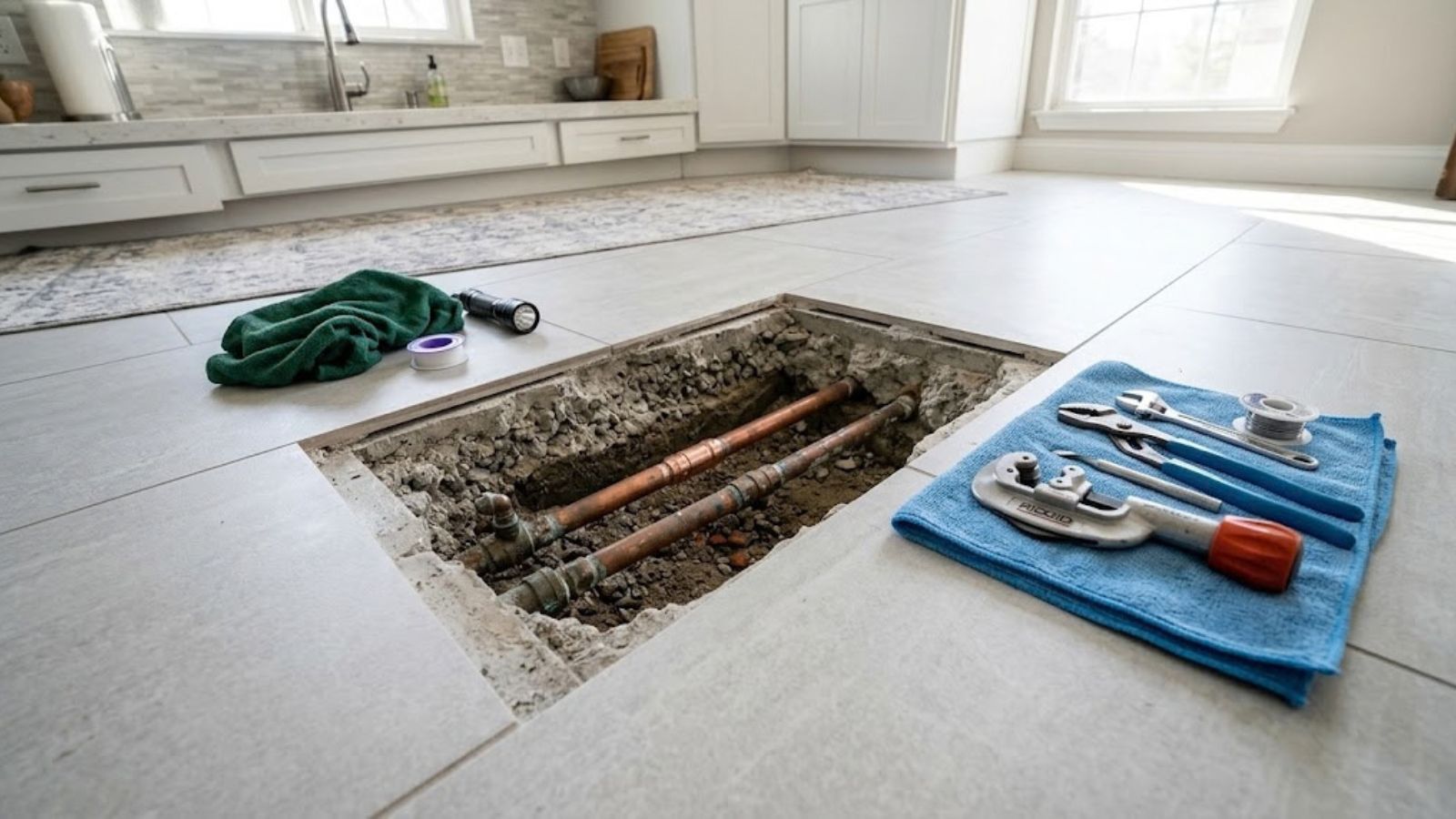
Two houses with what looks like the same problem, a warm patch on the floor, can end up with very different bills depending on where the leak actually is and how it gets fixed. A leak under an open hallway with easy access to a plumber's equipment costs far less to reach than one under a kitchen island or load-bearing wall.
That's why a real detection visit always comes before a price quote here, not after: guessing at the location and cutting blind is how a job that should have cost $1,500 turns into one costing three times that.
Queen Creek's own ground plays a real role too. The caliche and clay soil common across the town shifts as it wets and dries, and that movement is a genuine, common cause of slab leaks here, not just ordinary pipe age. A newer home isn't automatically protected from this the way it might be in a market with more stable soil.
Warm spot on your floor? Call (480) 741-9332 for a real detection visit.
Material Choice And Its Effect On Cost
When a repair or reroute is needed, the material used affects both the immediate cost and the long-term outlook. PEX, the flexible plastic tubing common in newer Queen Creek homes, is generally less expensive to install and handles the kind of soil-related flexing that causes slab leaks here somewhat better than rigid copper. Copper remains a durable, proven option, and some homeowners prefer it despite the higher material cost, particularly when matching existing copper plumbing elsewhere in the home.
Neither material choice changes the fundamental math of spot repair versus reroute versus full repipe. It mainly shifts the price within whichever category applies to your specific situation.
What Each Step Actually Costs
| Step | Typical Cost | What Drives The Price |
|---|---|---|
| Leak detection | $300 to $550 | Property size, number of suspected areas |
| Direct spot repair | $1,200 to $3,500 | Depth, accessibility, flooring restoration |
| Rerouting (above-slab or attic) | $1,800 to $4,500 | Distance rerouted, wall/ceiling access needed |
| Full repipe | $4,500 and up | Home size, number of fixtures, material chosen |
These figures reflect real ranges seen across the East Valley. Your exact number depends on your specific home and always comes as a written estimate before work starts.
How Location In The Slab Affects Price
A leak under an open hallway or a bedroom with no furniture in the way is genuinely the easiest and least expensive scenario, since there's minimal demolition and restoration involved beyond the repair itself.
A leak under a kitchen island, a load-bearing interior wall, or a finished, tiled area adds real cost on both ends: more careful access work going in, and more restoration work coming back out once the repair is done. This is exactly why a quote given before a detection visit is essentially a guess, and why we don't provide firm numbers until we've actually located the leak.
Waiting Almost Always Costs More
A slab leak that's caught early and repaired directly is a plumbing job. The same leak left for weeks or months can soak flooring, damage drywall, and in bad cases affect the foundation itself, turning a $1,500 plumbing repair into a project that also needs flooring replacement, drywall repair, and possibly mold remediation layered on top.
None of that additional cost is inevitable, it's specifically what happens when a warm spot or rising water bill gets ignored rather than checked. Every repair we perform meets the 2021 International Plumbing Code (IPC) Queen Creek has adopted.
Catch it early: Call (480) 741-9332.
If your insurance is going to be part of the picture, documenting the leak and the repair with photos and, where applicable, the detection equipment's findings gives you real evidence for a claim rather than just your word. Some Arizona policies cover part of the access and repair cost. Others don't cover slab leaks from gradual wear at all. It's worth knowing which kind of policy you have before an emergency, not during one.
Don't wait on a suspected leak. Call (480) 741-9332 now.
How To Tell It's Actually A Slab Leak
Not every warm floor patch or water bill increase is a slab leak specifically. A warm patch with no other explanation, especially near a water heater or along a wall where hot water lines typically run, is the classic sign.
A rising water bill with no real change in household usage is another strong indicator, particularly if your water meter keeps moving even with every single fixture in the house completely turned off. A hissing sound near a wall or under a floor when nothing is running rounds out the most common signs we hear about before a confirmed diagnosis.
None of these signs alone proves a slab leak on their own. They're what tell us it's worth scheduling a real detection visit rather than waiting to see if the problem simply goes away on its own, which it generally never does.
What To Do If You Suspect A Slab Leak
- ✓Locate your home's main water shutoff valve now, before you need it, usually near the street-side hose bib or the water meter.
- ✓Note exactly where the warm spot or sound is strongest. That detail speeds up the detection visit.
- ✓Photograph any visible flooring or wall damage before cleanup starts, in case it's relevant to an insurance claim.
- ✓Avoid cutting into the slab yourself or hiring anyone who wants to skip the detection step and start cutting blind.
Suspect A Slab Leak In Queen Creek?
Get a real detection visit and an honest price before anything is cut.
Soil Movement And Slabs, From Arizona Sources
The Arizona Geological Survey says expansive clay soils swell and shrink and can cause cracked foundations and heaving floor slabs, and it advises reducing watering around your home's foundation. University of Arizona Extension describes caliche as soil cemented by calcium carbonate and says many southern Arizona soils have layers of it.
Neither page singles out Queen Creek, so treat them as general guidance for clay and caliche soils and not as a finding about your lot. A leak detection visit is the only way to know what is happening under your slab. We locate slab leaks for homes in The Villages at Queen Creek and Encanterra.
Sources: Arizona Geological Survey, problem soils and University of Arizona Extension, caliche.
For the full detection and repair process, see slab leak detection & repair. If your situation turns out to involve more than one section of your plumbing, repiping & whole-home pipe replacement covers that broader scope. And if you're in one of Queen Creek's older communities like The Villages at Queen Creek, aging original plumbing is a real factor worth knowing about alongside the soil movement itself.
Frequently Asked Questions
A direct spot repair through the slab is usually the least expensive option when the leak is in one accessible location, typically landing in the $1,200 to $3,500 range in Queen Creek. Rerouting the line above the slab costs more but avoids cutting into the foundation.
It varies by policy. Some Arizona policies cover the cost to access and repair the leak, cutting into and patching the slab, but exclude the plumbing repair itself. Others exclude slab leaks caused by gradual wear entirely. Check your specific policy language before assuming coverage.
For a single, isolated leak in an otherwise sound system, a spot repair or reroute is usually the more economical choice. A full repipe makes more sense once you've had multiple unrelated slab leaks, which signals the whole system is aging out rather than one bad section.
In the Queen Creek and broader East Valley area, professional acoustic leak detection typically runs $300 to $550. That fee is what tells a plumber exactly where to cut, which is what keeps the rest of the job's cost under control.
The Arizona Geological Survey says expansive clay soils can crack foundations and heave slabs, which can stress pipes under them. Its page does not single out Queen Creek, so a leak detection visit is the only way to know what is happening under your slab.